
The Reality of "Old Shanghai"
What the movies and books don't tell you.

The decades between the two World Wars were bizarre, unique, and are kind of like the dinosaurs culturally - everything was different then, but there are very few remnants of the era today. The major cultural earthquakes of the era - US Prohibition, abstract European art, Jazz music, late Western colonialism, the Art Deco movement - are still here in relics and aftershocks, but in general those connections need to be pointed out. However, a LOT of things went down in that era, and it’s well worth exploring.
This essay is about Old Shanghai, a time and place that often gets glorified for its East meets West art and culture, during a colonial era that lasted around 100 years starting in 1843 and peaked in the 1930s. Is its reputation warranted? Read on.
Culturally, the interwar period is MOSTLY forgotten, but there are a handful of settings (for lack of a better word) that most people will know about if they pay attention to modern media. First, Jazz Age New York is always good for a movie, book, or TV show. This would be the world of the Great Gatsby, one of excess and flappers, and it certainly existed – although most people in the NYC region during the 1920s weren’t, obviously, filthy rich, and couldn’t frequent the insane parties that you see portrayed in period pieces today.
Another, more down-to-Earth part of New York history that is often remembered would be the Harlem Renaissance. Despite complications such as white-money/black-artist issues and the shitty opportunism of the Van Vechtens (you can look them up, shame), this was a period of major growth for the role of black creativity in the art world. Obviously there’s no difference in anyone’s capacity to make art, but African Americans would access mediums during this time that had been gatekept previously, and the exposure black artists achieved during the Renaissance, however tainted, would alter race relations in the USA forever. One of the more positive, if complicated, moments in the 1920s United States.
Less positive would be the dark side of Prohibition, whether we’re talking about the world of West Virginian moonshine smuggling or Al Capone’s Chicago and his face-off with Elliot Ness. This, like Jazz Age New York, happened, even if most of the USA wasn’t as violent as media set there might make you think. Booze cut with nastier chemicals was a bigger threat to most US citizens than bullets were, but most of the stories told using this background are plausible.
And, moving abroad, we come to Weimar Berlin; although it was a time of hardship and inflation, all the weird art and fashion did exist in the German capital at this time. It was a wild spot, possibly the wildest globally in the Interwar era – and it’s NOT a coincidence that the Nazi party came to power pointing at this cultural scene and calling it the collapse of society (there are parallels here to queer US culture and its conservative backlash, sadly). In short, it was a high point of humanity – if you’re annoying Nazis, you’re doing something right.
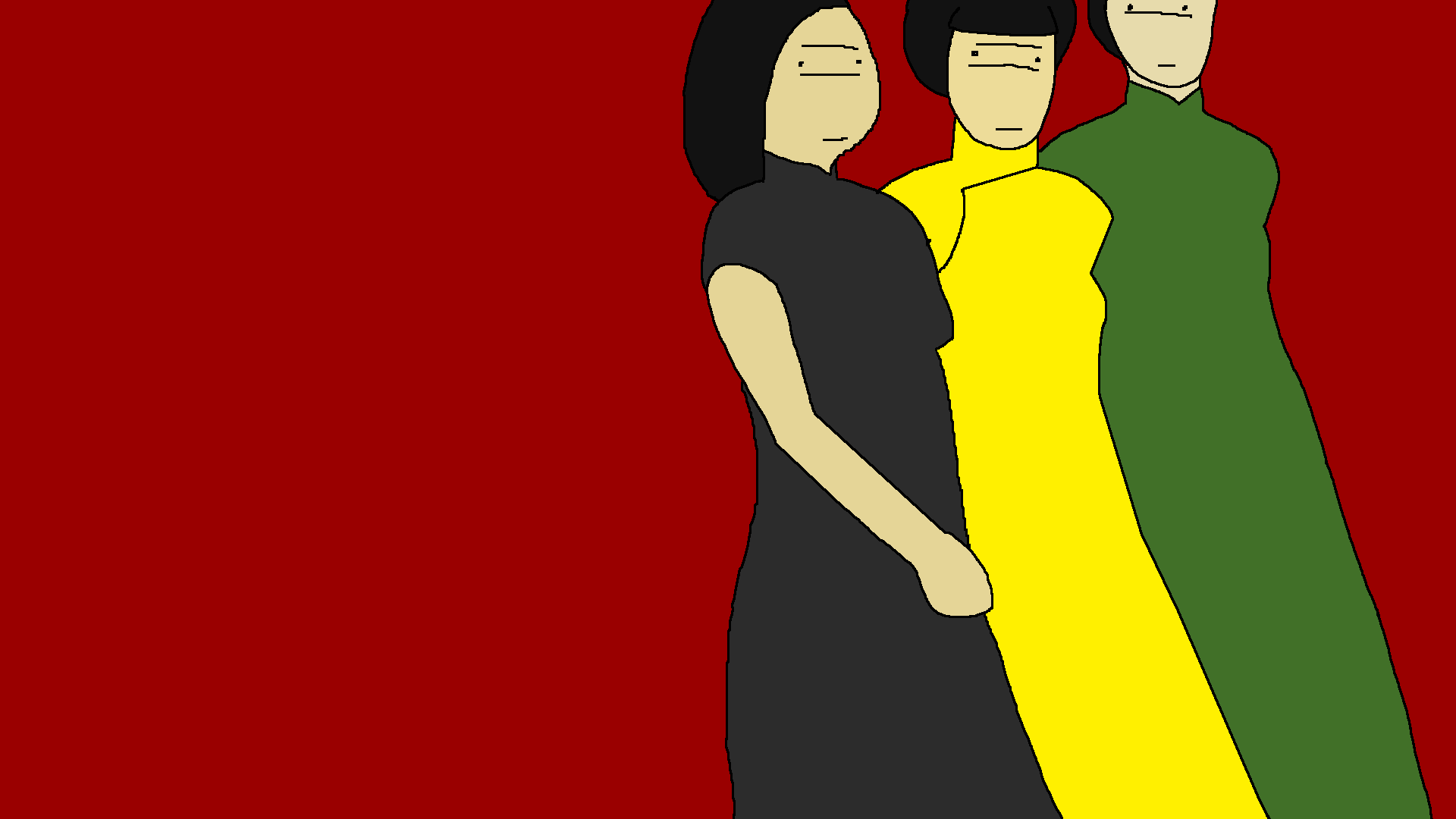
Finally, we have Old Shanghai. If this era is exemplified by one object, it would be a certain type of dress – the cheongsam, also known as the qipao (see below), which is more or less a traditional Chinese garment updated to fit in with Western fashion trends. Pioneered by the well-known socialite (and one-time first lady of China) Madame Wellington Koo, the traditional qipao was altered to be more form-fitting and expose more skin (there’s a slit up the side usually, not pictured); although altered again by modernity, this type of dress is still used, usually as formal wear.
In the same way, Old Shanghai (a term used to refer to the city up until the Communist takeover of China in 1949) is often thought of as an East meets West moment, a time and place where China was influenced and modernized by European and US cultures. And… technically it was, I suppose, but things were very different than you might think looking at it from a modern entertainment angle.
For one thing, by 1936 Shanghai had a population of 3 million, of which only an estimated 50,000 citizens were of European descent. Of this tiny slice of the city’s demographics, an estimated 35,000 were Russians that had fled their country after the 1917 revolution; this population was much, much poorer than the white Shanghai class of legend, and were far more likely to be prostitutes than to attend high-class events.
That puts the classically understood white population of 1936 Shanghai, during its greatest period of excess, at 15,000 – and that’s the high end estimate. For reference, going by these statistics, the percentage of non-Russian white people in Shanghai in 1936 was, at most, 0.005%. Shanghai is relatively devoid of foreigners today, in 2022 – but the percentage is almost certainly higher now than it was in the 1930s (official Chinese statistics are more or less worthless, so that’s just an educated guess). Basically, the white community in Old Shanghai was beyond tiny.
Much larger was the Chinese upper class of the city, but even that group was far removed from the reality of street-level Old Shanghai. This group was so often kidnapped by gangsters in the 1930s that they were rarely without security guards, and rode around in bulletproof private cars. In short, Europeans and wealthy Chinese were the extreme minority.
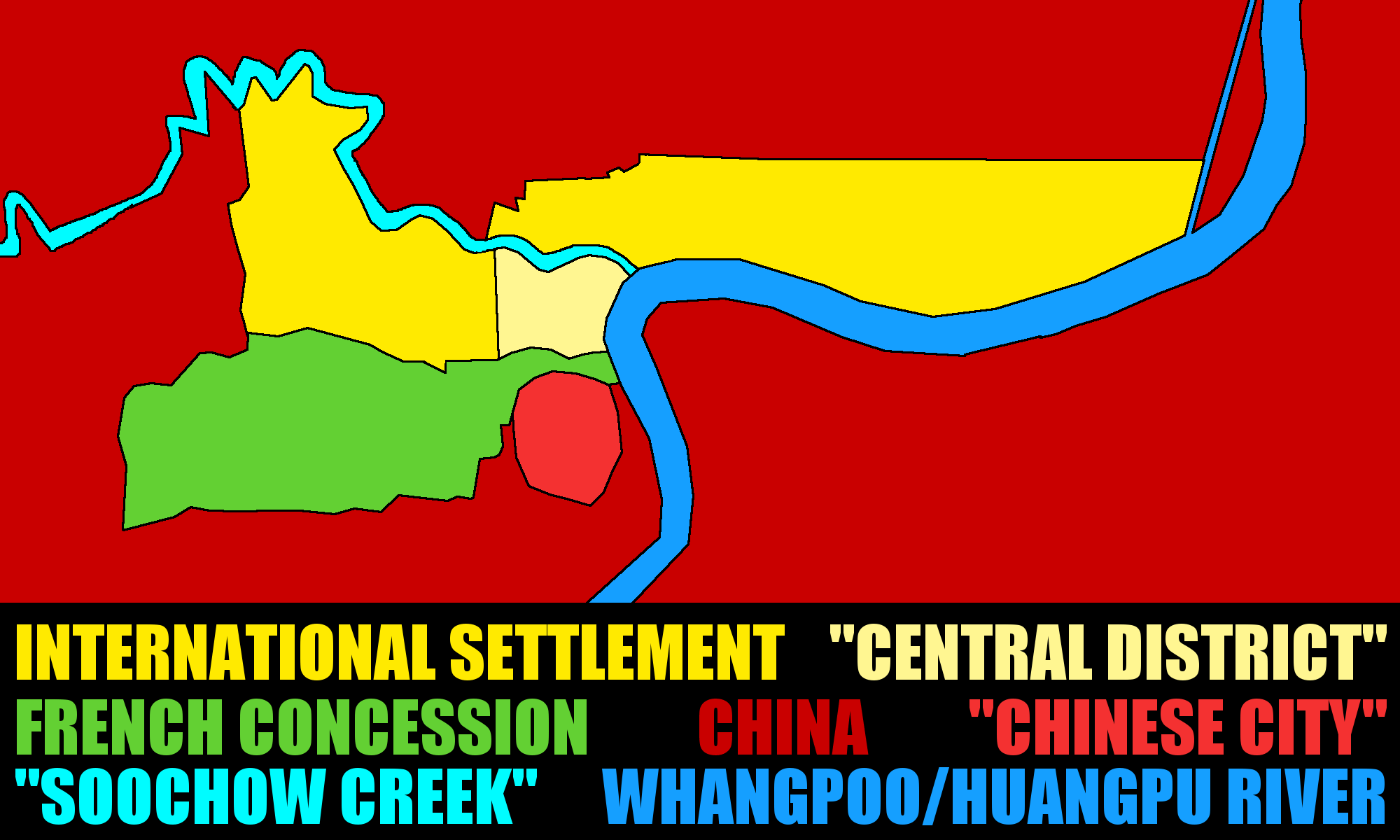
So what was Old Shanghai really like? First, we need a little perspective. A common misconception puts Shanghai’s birth date at 1843 – the year Europeans showed up and settled what was, at the time, a mudflat. That’s half true. The land that made up the International Settlement and French Concession (see map above) was probably indeed mud when Europeans started to settle it – but there was already a Chinese trading port just next door; its walled portion would end up being referred to as Shanghai’s Chinese City (see above, again), and a settlement in the Shanghai area was mentioned in Imperial Chinese records dating back to the 1200s.
Now, that settlement was probably a village in the 1200s, but by the time Europeans arrived Shanghai had already undergone an economic revolution, growing from what was likely a negligible river port into a pre-modern international shipping center. Shanghai’s growth was probably set off by a Ming Dynasty public works project that was conceived after a flood in the region in 1403 (I say probably because, to be frank, this is an assumption, but the following are facts). To give the city of Suzhou access to the sea, the Wusong river was diverted to enter the Huangpu at Shanghai’s location, a project finished by 1569. In English, the Wusong is known as Soochow Creek (see map again), but it is far more than a small tributary: it was a dredged canal linking the ancient city of Suzhou to the sea.
And so, Shanghai was (likely) born as Suzhou’s port. Suzhou was a major Chinese city at the time, and was an importer and exporter of goods; cargo traveling through Shanghai would reach the upper reaches of the nearby Yangtze river (the banks of which are a MAJOR Chinese population center), other coastal areas of China, and East Asian nations like Japan, Korea, and Ryu Kyu (the ancient kingdom that once made up Okinawa and its surrounding islands) as well as Southeast Asia. Whether you count Shanghai’s birth year as 1291 (the official Chinese line) or 1569, the Europeans came very late to the party.
But when they did come, what was at best a somewhat important trade hub became one of the world’s most famous cities. By the 1860s the city’s name was an established verb, and not a great one: to be ‘shanghaied’ meant you were knocked or poisoned unconscious and, while you were out, signed up to work on a ship; you would find all this out after waking up on the ship, at sea, already headed to your voyage’s destination. This word probably originated on the west coast of North America, and supposedly refers to the fact that Shanghai was a very, very long journey from San Francisco or Portland, two of the worst cities to black out in during the years of the practice. Although the verb isn’t a reference to Shanghai’s character as a city, and more about its location as a port, it’s worth remembering that modern Shanghai was founded in 1843 – in its first few decades, it became known worldwide for both travel and some pretty nasty vice.
Which isn’t surprising given the morality of the founders of the modern city. Shanghai was made up of concessions, land that was essentially rented from Imperial China by European powers. The British concession was established in 1846, the American concession in 1848, and the French concession in 1849; all of these were essentially countries within countries, with their own governments and police forces. Why would China agree to rent land, and all sovereign rights it held on that land, to Europeans? Because they had just lost a war.
In short, the First Opium War went like this: Britain had a trade deficit with China (it was buying tea and teaware with cash, not trading good for good), but came up with a plan to solve the problem and keep their money – they started growing poppies on Indian plantations, and got China hooked on opium. China, of course, wasn’t happy, and shut the British out of their ports; Britain (with help from the USA and France) went to war with China – again, for the right to sell them drugs – and won. After this loss, China was forced to ‘open’ five ports to the victors, which resulted in the concessions (there were more wars, and more messed up conditions after the Europeans won them all, but the First Opium War is the one that resulted in Shanghai’s growth). And thus, what we’ll be calling Old Shanghai was founded by warmongering drug dealers.
Shanghai’s layout was finalized in 1863, by the formation of the International Settlement, which fused the American concession (north of Soochow Creek) and the British Concession (south of the same); the French originally joined, but decided to keep their own territory in the end. If the French HAD joined the Settlement, Shanghai would probably have been much different. Why’s that?
Well, from the start the French Concession betrayed its name; around 12 Frenchmen lived in the area when it was declared French territory, and it would remain pretty much European-free until the end of Old Shanghai (although there were certainly French restaurants and shops to serve that tiny population, giving it a French tinge). Chinese citizens were the vast majority of residents in all parts of the city from very early on, but this trend was REALLY solidified by the effects of the Taiping Rebellion, a China-wide revolution attempt in the 1860s; the conflict brought refugees to the European concessions, who were hoping to escape Chinese law by doing so – the fact that this tactic worked encouraged more migration to the International Settlement and French Concession. Shanghai grew to a population of 3 million in the 1930s mostly due to this immigration pattern.
Why the French Concession mattered so much to Shanghai Chinese (called Shanghainese, versus foreigners in the city, who called themselves Shanghailanders) was that the French authorities in the territory were easily corrupted. We can look at the three territories of the city like this: the International Settlement had an actual European population, a competent police force, and very real consequences for criminal behavior, at least if you messed with Europeans; the Chinese City was, from what I’ve read, a labyrinth of cramped alleys, and so poor and crowded it would have been hard to govern at all. However, the French Concession was the best of both worlds – it was protected by a European power, but, in reality, lacked a coherent government; that is, unless you counted the Green Gang, who paid the French government around $20 million a year in bribes in the 1920s (we’ll get to them).
All this variety in territorial law was easy to take advantage of; really easy. It was possible to move from the International Settlement and its police, to the French Concession and its government, to the old Chinese City and China’s laws, merely by walking (or running) a few blocks – the borders weren’t policed, and cops in the three territories weren’t prone to sharing information. Basically, as far as this sort of legality, Shanghai was a criminal’s dream. Yeah.
This is probably why both the Chinese Communist Party AND the Chinese Nationalists, the two organizations that ended up toppling the Qing dynasty and ending China’s Imperial era, held their revolutionary meetings in the French Concession. If someone raided their meeting place, they could take a brisk walk into another country, and the raiders couldn’t legally follow. However, the Nationalists (Sun-Yat Sen and crew; this is getting long, so you can look up Chinese revolutionary history yourself, I’ll give a link at the end) had another reason to meet in the French Concession – the territory was, more or less, run by the Green Gang, a Chinese organized crime organization; it’s a little-talked-about fact that the Nationalists were, themselves, HEAVILY connected to criminal organizations, including the Green Gang. So there you go.
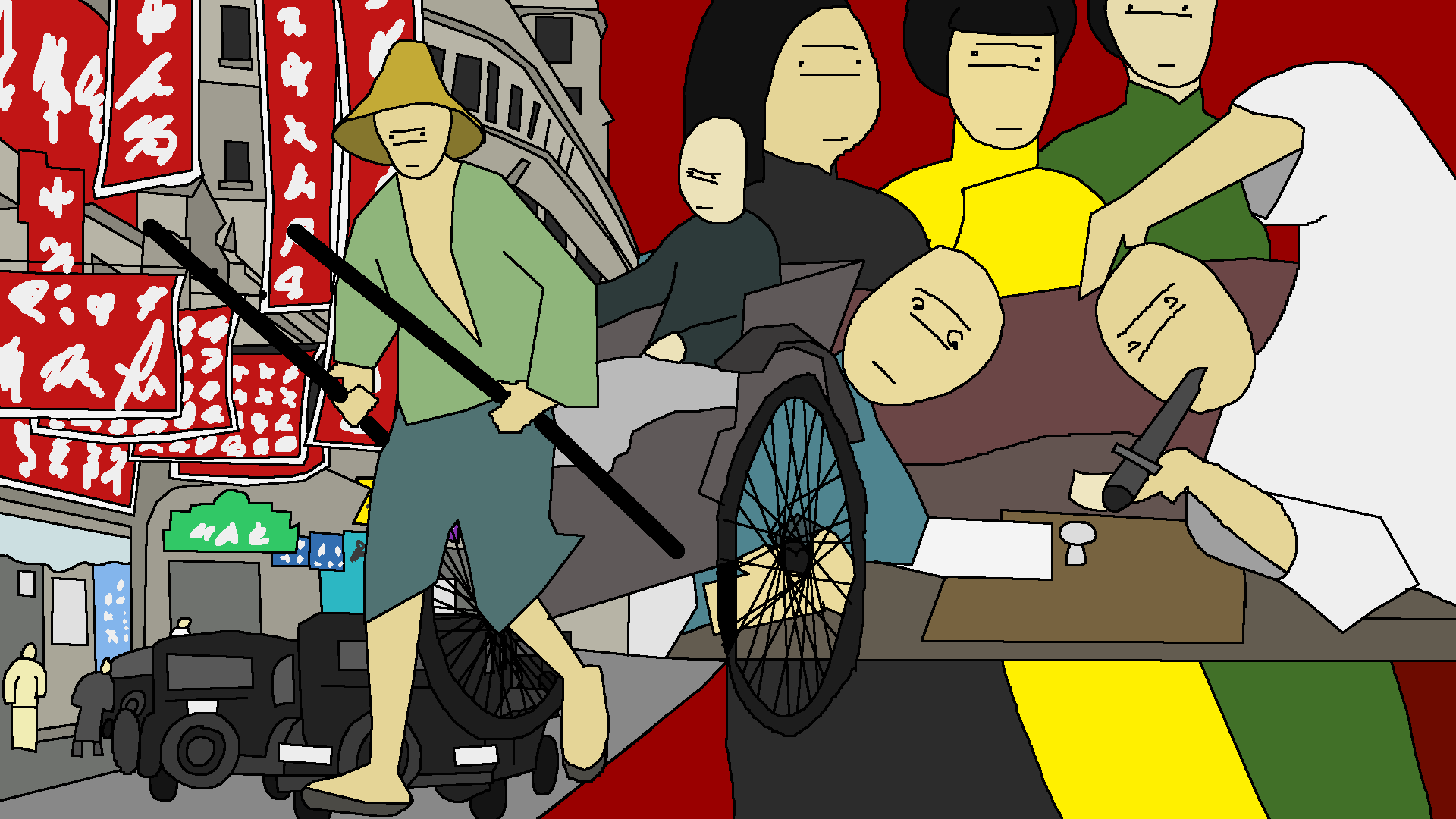
If Old Shanghai sounds cool here… well, believe it or not, Shanghai’s population consisted of more than just criminals, and life really sucked for most Shanghainese, regardless of where you lived. Shanghai’s European settlements were notorious for having WAY more men than women, so guess what was a big illicit industry in the city? According to one of my source books, and I’m not making this up, at one point 1 in 30 Shanghai residents was a prostitute. That’s a LOT of sex workers, and there was variety: there were glamourous socialite escorts, a ridiculous amount of brothels, and a ton of street walkers. Sound bad?
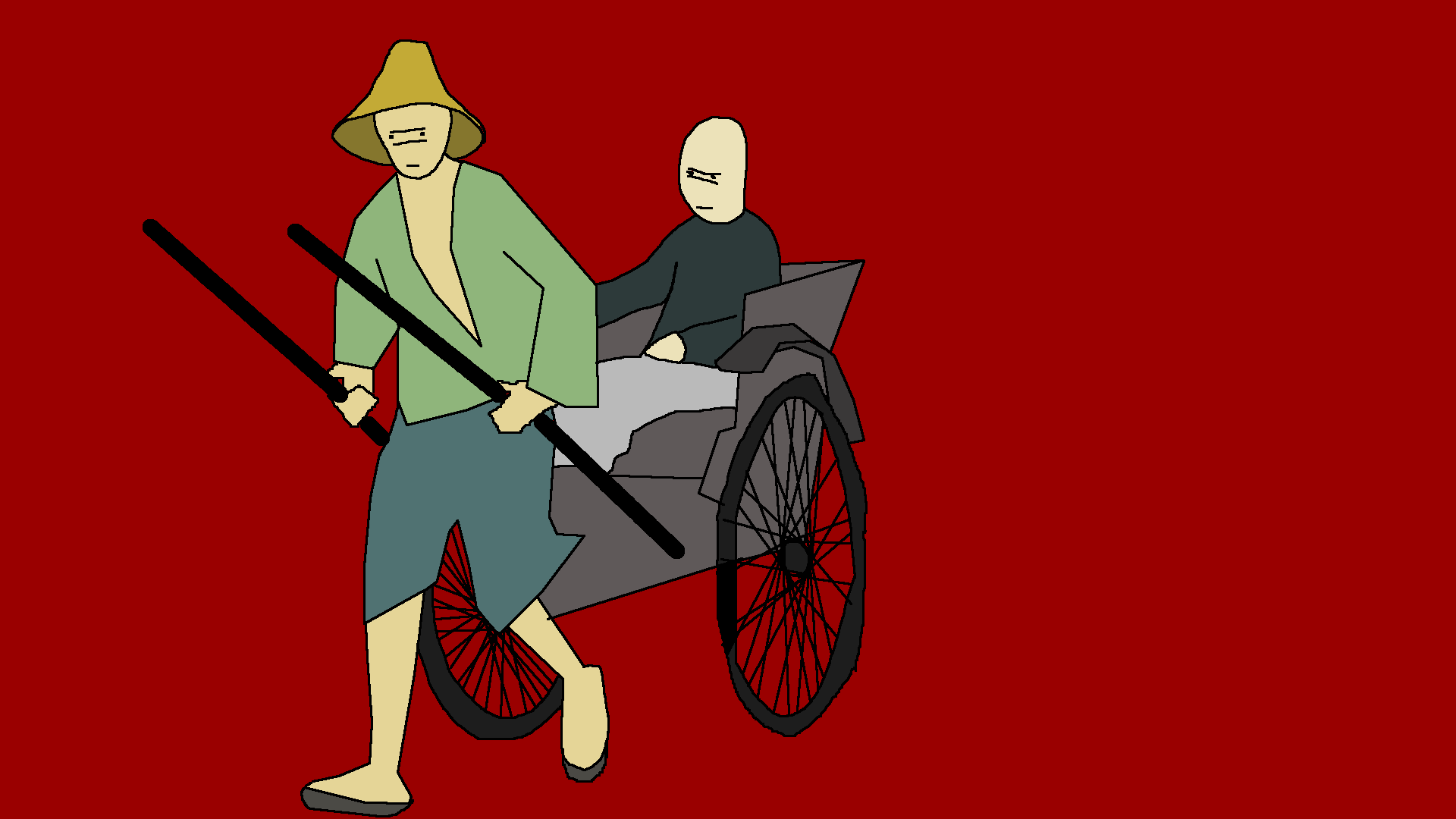
Well, two other huge industries saw barely-paid Shanghainese running rickshaws (basically human-drawn carriages, a Japanese import) and walking heavy goods from one place to another. The Green Gang ran protection rackets throughout Shanghai, so you had to stay on your toes there (Green Gang bosses were, eventually, deferred to by the Europeans running the International Settlement, and had tentacles everywhere). Opium addiction was an epidemic among the Shanghainese, which is, of course, sad but far from shocking, and the massive amount of street-sleepers and beggars is usually noted in accounts of visiting foreigners. Sound bad?
The International Settlement was by far the best policed territory in Old Shanghai, but in the year of 1937 (if I did the math right) around 22,200 corpses were found abandoned within it (this includes bodies found in coffins, a statistic I don’t really know what to make of). And again, that’s not counting the French Concession or the Chinese areas. That’s a LOT of death; specifically, the abandoned bodies in the International Settlement ONLY give a death rate of 741 deaths per 100,000 people, per year. For reference, the murder rate in Ciudad Juarez, during one of its most violent years (2010) was 252 per 100,000 people. And that’s JUST abandoned bodies in the International Settlement. Insane.
In conclusion sure, Shanghai was a glitzy dreamland for a handful of Europeans (the Shanghailanders) and wealthy Chinese. But it was more a collection of borders that bred vice and turned into a hell for actual Shanghainese. Even though revolutionaries used the territorial boundaries to their advantage, they sure as hell wanted to kick the Europeans out. And for good reason – they’d created a really nasty place.
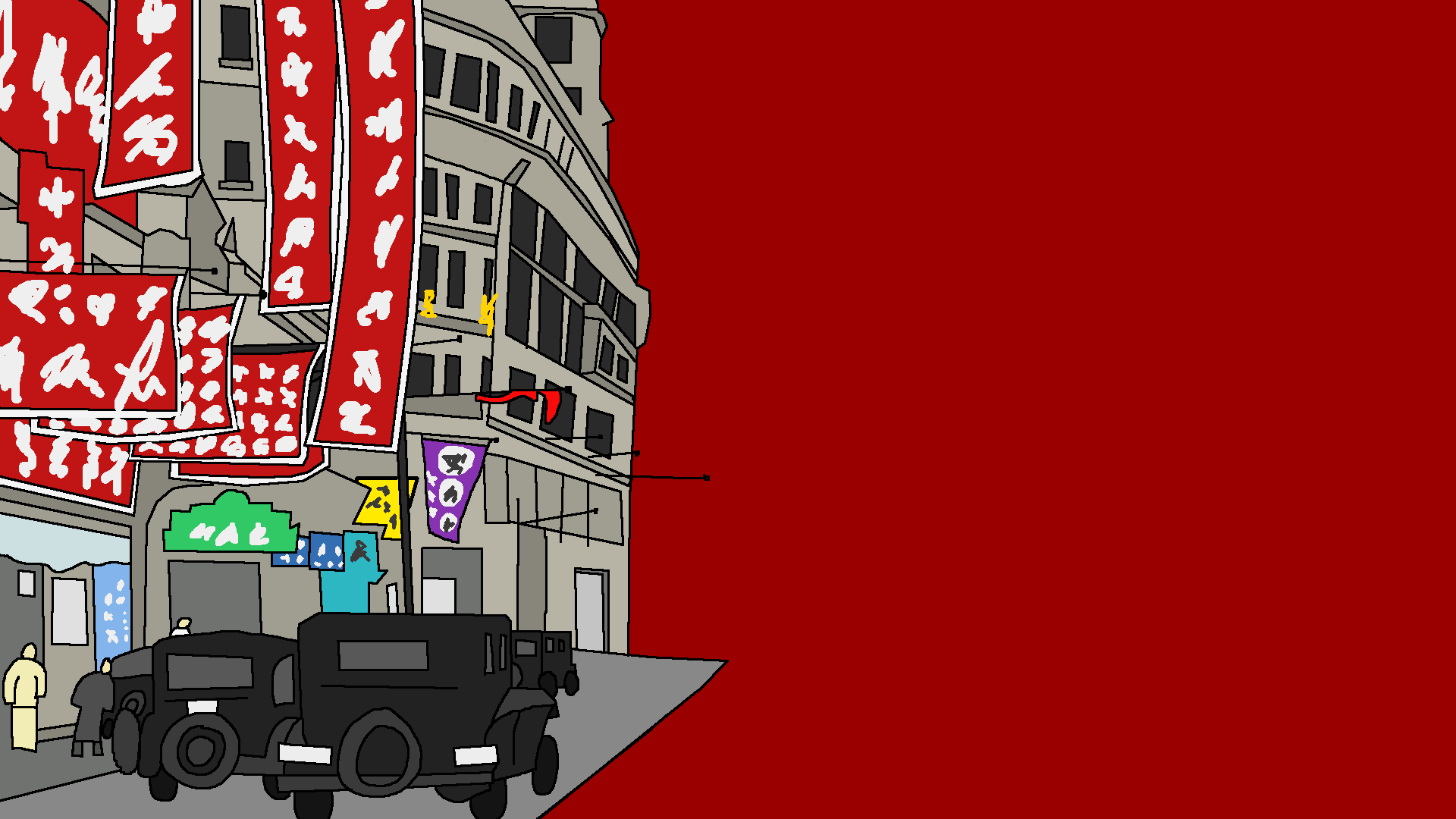
Old Shanghai ended pretty badly, and decisively – World War II, a tanking economy, and the eventual revolutions (see link below) changed it all but in name. Today Shanghai is cosmopolitan by Chinese standards, but by other standards? Well, it’s a far cry from Paris, NYC, or Sao Paulo. It’s not called Old Shanghai for nothing – it doesn’t exist anymore. And, besides in a few ballrooms and the collection of European buildings near Soochow Creek (known as the Bund, in the old Central District), the Old Shanghai of legend never existed at all.
If you liked this piece, subscribe!
Notes and Links:
Here are some pages about the political history of China, focusing on the revolutionary period:
Information on the Soochow Creek canal, and the source of my extrapolation about Shanghai’s role as Suzhou’s port, comes from piecing together Wikipedia pages. The Ming dynasty public works project linking the cities was not mentioned in my source books on Shanghai’s history, and thus the Suzhou-Shanghai connection was neither confirmed or rejected. Here’s a link to the Soochow Creek page:
One of the two books I used for the basic history of Old Shanghai came as part of a box set of thin books on China’s history, but it looks like it’s available on its own. The book is Shanghai: Gateway to the Celestial Empire, by Stella Dong, and it’s rare. However, the author wrote another book on Shanghai which is more common, and you can find it here:
Shanghai, Rise and Fall On AbeBooks
The other is a more in depth study of Shanghai’s past, of which I only used relevant sections: Global Shanghai, 1850-2010, by Jeffrey N Wasserstrom. It’s a bit on the scholarly side, but it’s a good read, and continues to chart Shanghai’s history from the European era to the year 2000. Relatively common.
Peace!